
Whether you're after misty mountain treks, lantern-lit old towns, or a slow week on the beach, Vietnam has a season for it, just rarely the same one across the whole country. If you have a festive break, the summer holidays, there’s usually a part of Vietnam at its best. One of the best things about visiting Vietnam is that you can apply for an online e-visa before you fly, so the paperwork is sorted too.
From street-food trails and island cruises to cave treks and coffee stops, there’s plenty to fill your days. The bigger question is when to go, and that depends on the trip you have in mind. This guide breaks down the best time to visit Vietnam by region, month, and travel style, so you can match your trip to the dates you have.
Best Time to Visit Vietnam: At a Glance
| When to go | Where to go | What to expect |
|---|---|---|
| March to April | 🗺️ The whole country, from Hanoi in the north to Hoi An in the centre and Ho Chi Minh City in the south | ☀️ Good conditions across the north, centre and south |
| October to April | 🏙️ North Vietnam: Hanoi, Ninh Binh and Ha Long Bay | 🧥 Cooler conditions, with clearer days particularly common in autumn and spring |
| March to May; September to November | 🥾 North Vietnam: trekking in Sapa and Ha Giang | ⛰️ Comfortable walking weather and strong mountain scenery |
| February to May | 🏮 Central Vietnam: Hue, Da Nang and Hoi An | 🌤️ Drier weather and manageable heat before midsummer |
| January to August | 🤿 Central Vietnam: Nha Trang | 🌞 Long sunny period, with rain more likely later in the year |
| December to April | 🛶 South Vietnam: Ho Chi Minh City and the Mekong Delta | 🚶 Drier weather and easier sightseeing |
| November to March | 🏝️ South Vietnam: Phu Quoc | 🌊 Dry days, calmer seas and good beach conditions |
To see why the timing changes so much from one region to the next, it helps to know how Vietnam’s weather works.
P.S. With so many landscapes packed into one country, the weather can be a little unpredictable. Pack with a bit of flexibility, and you’ll be ready for whatever the skies decide.
Understanding Vietnam’s Climate
Vietnam has tropical and subtropical weather, and because the country is so long and narrow, it splits into three broad climate zones. Each one has its own rhythm, so it helps to know which zone you’re heading to.
North Vietnam: Hanoi, Ha Long Bay, Sapa and Ha Giang
The north has four distinct seasons, which makes it feel quite different from the rest of the country. Winters, from December to February, can be surprisingly cold and damp, especially up in the mountains, while summers, from May to August, are hot, humid and rainy. On a winter day in Hanoi, temperatures often sit around 15–20°C, and nights in Sapa can drop close to freezing, so pack a warm layer if you’re heading there.
Central Vietnam: Hue, Da Nang, Hoi An and Nha Trang
Central Vietnam has a tropical wet and dry climate, and for much of the year it’s warm and dry. The rain arrives between September and December, sometimes with typhoons, and October and November are usually the wettest months.
South Vietnam: Ho Chi Minh City, the Mekong Delta and Phu Quoc
The south stays warm and tropical all year, so you’re unlikely to need a jacket here. It has two main seasons: a dry season from roughly November or December to April, and a wet season from May to October or November. In Ho Chi Minh City, daytime highs usually sit in the low-to-mid 30s°C, whatever the month.
Most first-time routes through Vietnam run from north to south so that’s where this guide begins too. The north is also the one part of the country with a proper winter, so the month you pick changes your trip here more than anywhere else. Let’s go deeper into it.
Best Time to Visit Northern Vietnam
.webp)
Hanoi, Ninh Binh and Ha Long Bay
Hanoi is where many trips to the north begin, and the city is usually at its most comfortable from October to April. October and November bring milder temperatures and clearer skies, while December to February can be cool and overcast. By March and April, it’s warmer again, but without the full heat of summer.
The cooler months are also the best time to eat your way through the Old Quarter, because a bowl of phở or bún chả from a street-side stall tastes better with a chill in the air. If you’re in town over a weekend, head to Hoan Kiem Lake in the evening: from Friday to Sunday, the streets around it close to traffic and turn into a walking zone.
About two hours south of Hanoi by road, Ninh Binh swaps the city’s buzz for rivers, rice fields and limestone peaks.
Ninh Binh is at its best from March to May and from September to November. Boat rides through Trang An or Tam Coc are more comfortable outside the hottest and rainiest months, and the surrounding rice fields add seasonal colour. Around Tam Coc, the rice turns gold in late May and early June, just before it’s harvested.
You can visit Ninh Binh as a day trip from Hanoi, but staying a night lets you get out on the water at Trang An, a UNESCO World Heritage Site, early in the morning.
From Ninh Binh’s rivers, the next step for many travellers is the sea and the limestone islands of Ha Long Bay.
For a Ha Long Bay cruise, plan for March to May or September to November. Spring often brings sunshine and a light breeze, while autumn can offer clear views of the limestone karsts. Winter cruises can be atmospheric, though mist may reduce visibility. Between June and September, the weather can be unpredictable, and storms occasionally disrupt sailing schedules.
Ha Long Bay is about two and a half hours from Hanoi by expressway. An overnight cruise lets you see both sunset and sunrise among its roughly 1,600 limestone islands and islets, which a day trip can’t. If you’d like quieter waters, look for cruises that head into neighbouring Lan Ha Bay, off Cat Ba Island.
If you’d rather swap the water for the mountains, the far north has some of Vietnam’s best trekking, as long as you time it right.
Sapa and Ha Giang
The best months for trekking in the northern highlands are March to May and September to November. In Sapa, April and May usually bring comfortable walking conditions, and late August and September are especially beautiful, as the rice terraces turn golden around harvest time. From December to February, nights can be sharply cold, and fog can hide the mountain views.
Sapa sits at around 1,600 metres, so it stays noticeably cooler than Hanoi all year. You can get there on an overnight train to Lao Cai or a five-to-six-hour bus via the expressway. On a clear spring or autumn day, take the cable car up Fansipan, Indochina’s highest peak, for views across the Hoang Lien Son range.
Further north, along the border with China, Ha Giang is wilder and quieter than Sapa.
Ha Giang is rewarding in both spring and autumn. September to November tends to be cooler, and buckwheat flowers often appear later in the season. Most riders take three to four days to complete the Ha Giang Loop, which crosses the Ma Pi Leng Pass and the Dong Van Karst Plateau, a UNESCO Global Geopark.
July and August are monsoon months, when landslides and rough roads can affect the loop. If you’re not an experienced motorbike rider, it’s safer to go with a reputable guide or ride as a passenger with an experienced driver.
Head south from the mountains, and you reach central Vietnam, where the weather follows a different calendar. Here the best months come earlier in the year, and most of the rain arrives towards the end of it.
Best Time to Visit Central Vietnam
Hue, Da Nang and Hoi An
Hue, Da Nang and Hoi An sit close together, so they’re easy to combine on one trip. February to May is usually the best window for this stretch of coast: rainfall is lower, temperatures are comfortable early in the season, and the days get sunnier as the months go on.
Hue, the old imperial capital, is particularly pleasant from February to April. June and July can be extremely hot, which you’ll feel if you’re exploring the Imperial City and royal tombs, part of a UNESCO World Heritage Site. Rain gets more persistent from late summer, and flooding is possible towards the end of the year.
To beat the heat, visit the tombs of Minh Mang, Tu Duc and Khai Dinh early in the day. And when it’s time to head on to Da Nang, go by road over the Hai Van Pass, one of central Vietnam’s most scenic drives.
If beaches are your priority, Da Nang works well from March to August. March to May is good for both sightseeing and swimming, while June to August is hotter but often brings calm, clear seas. My Khe Beach is a short ride from the city centre, and Da Nang’s airport is also the easiest way to reach Hoi An, about 45 minutes away by road.
Hoi An is at its best from March to May, when the old town is easy to explore on foot or by bicycle. October to January is the wettest period, and storms and floods occasionally reach the riverside streets. If you visit in summer, do your outdoor exploring in the morning and save the hottest part of the day for a long lunch, a spa visit, or a tailoring appointment.
If you can, time your stay with a full moon. On the 14th day of each lunar month, the old town dims its electric lights, the streets are lit by lanterns, and small candle-lit lanterns float on the Thu Bon River.
A few hours north of Hue, the landscape changes again, from old towns to limestone mountains and some of the world’s largest caves.
Phong Nha
Phong Nha’s caves and limestone landscapes are at their best from April to June, when conditions generally suit boat trips, cycling, and guided cave expeditions. July to September gets hotter, and heavy rain from October onwards can cause flooding and temporary cave closures.
Some multi-day expeditions only run in certain months and have limited places, so book these before you plan the rest of your itinerary. The best known is Son Doong, inside the UNESCO-listed Phong Nha-Ke Bang National Park. It’s often described as the world’s largest cave, and only a small number of visitors get to go inside each year. While Son Doong is a must do, there are easier treks across the park.
Further down the coast, Nha Trang and the hill town of Da Lat make a good pair, with one for the beach and the other for cooler air.
Central Vietnam: Nha Trang and Da Lat
Nha Trang gets plenty of sunshine, so you can visit for much of the year. January to August is the most dependable period for beaches, boat trips, and snorkelling around the islands of the Hon Mun marine protected area, while rain is more likely from September to December.
Da Lat sits at around 1,500 metres, and that height gives it a cooler climate and its nickname, the City of Eternal Spring. The dry months from December to March are good for waterfalls, gardens, and trips into the countryside. Evenings can feel chilly, particularly from November to January, so bring a light jacket. In the wetter months, the scenery turns a vivid green, though you may need to adjust your outdoor plans.
As you head further south, the seasons get simpler. It’s warm all year, and the main thing to plan around is the rain.
Best Time to Visit South Vietnam
Ho Chi Minh City and the Mekong Delta
.webp)
Ho Chi Minh City is easiest to explore in the dry season, from December to April. December and January are relatively comfortable, while April and May can feel extremely hot.
The wet season, usually May to November, is still worth considering. Showers are often intense but short, and the city quickly gets back to its usual pace. Carry a compact umbrella, keep your outdoor sightseeing loosely planned, and save indoor stops like the War Remnants Museum or a long coffee for the afternoon, when the downpours usually roll in.
From the city, the Mekong Delta is an easy trip, and it follows a similar pattern.
December to February is generally the most pleasant time for touring the delta. The high-water period later in the year is worth considering too: the canals are full, the orchards are green, and wetlands such as Tra Su Cajuput Forest are especially atmospheric. Boat schedules and roads depend more on the weather then, so build in some flexibility.
Can Tho, about three to four hours by road from Ho Chi Minh City, is the easiest base for exploring the delta. Get to the Cai Rang floating market at dawn, when trading is at its busiest.
After the city and the delta, you might be ready for a beach, and the south has three very different stretches of coast to choose from.
Phu Quoc, Con Dao and Mui Ne
.webp)
Phu Quoc has its most reliable beach weather between November and March. Skies are clearer and the sea is often calmer, though this is also the busiest and most expensive time to go. April and May are hotter, and rainfall builds towards the wetter months from July to October.
Short flights connect Phu Quoc with Hanoi and Ho Chi Minh City, and the beaches on the west coast, like Long Beach, face the sunset.
Con Dao, a short flight from Ho Chi Minh City, is a little different. Its beach weather varies through the year, and the turtle-hatching period generally runs from May to December. If you’d like to see it, book through responsible, authorised operators that keep disturbance to nesting turtles to a minimum.
Mui Ne and the surrounding coast (formerly Binh Thuan province, now part of Lam Dong) are among the driest parts of Vietnam. November to April is a particularly good time for beaches, sand dunes, and water sports. The region gets some rain from May to October, but it often stays sunnier than the rest of the country.
From November to April, strong, steady winds make Mui Ne one of Vietnam’s main kitesurfing spots. If you’re visiting the white sand dunes, go at sunrise, before the heat builds.
If your dates are already fixed, the month-by-month view below shows where the weather will be on your side.
Vietnam Weather by Month
| When to go | Where to go | What to expect |
|---|---|---|
| January | ❄️ Cool in the north, mixed in the centre, drier in the south | 🏝️ Ho Chi Minh City, Mekong Delta, Phu Quoc, Nha Trang; Hanoi for cooler sightseeing |
| February | 🌤️ The north warms up, the central coast improves, and the south stays dry | 🏮 Hanoi, Ninh Binh, Hue, Hoi An, Ho Chi Minh City, Phu Quoc |
| March | ☀️ One of the best all-round months, with good conditions in many regions | 🧳 Cross-country trips, Phong Nha, central beaches, northern mountains |
| May | 🌡️ Hotter everywhere; rain starts in the south, but central beaches stay appealing | 🏖️ Da Nang, Hoi An, Nha Trang; Sapa early in the month |
| June | 💦 Hot and humid; rainy in the north and south, often sunny on the central coast | 🌊 Da Nang, Nha Trang and other coastal spots |
| July | 🌧️ Hot, with monsoon rain in the north and south; the central coast stays popular | ⛱️ Central Vietnam beaches; flexible city trips |
| August | 🌀 Similar to July, and storms can affect northern routes and cruises | 🤿 Nha Trang, Da Nang, selected central destinations |
| September | 🍃 The northern highlands improve, while central Vietnam gets wetter | 🥾 Sapa, Ha Giang, Hanoi; Nha Trang early in the month |
| October | 🍂 Pleasant in the north; storm and flood risk rises around Hue and Hoi An | 🏙️ Hanoi, Ninh Binh, Ha Giang, Ha Long Bay, Mui Ne |
| November | ✨ Excellent in the north, increasingly dry in the south; the central coast can stay wet | 🛳️ Hanoi, Ha Giang, Ha Long Bay, Ho Chi Minh City, Mui Ne |
| December | 🧣 Cool in the north, wet in parts of the centre, dry in the south | 🌴 Ho Chi Minh City, Mekong Delta, Phu Quoc, Mui Ne |
P.S. With so many landscapes packed into one country, the weather can be a little unpredictable. Pack with a bit of flexibility, and you’ll be ready for whatever the skies decide.
Best Time to Visit Vietnam by Experience
For Beaches
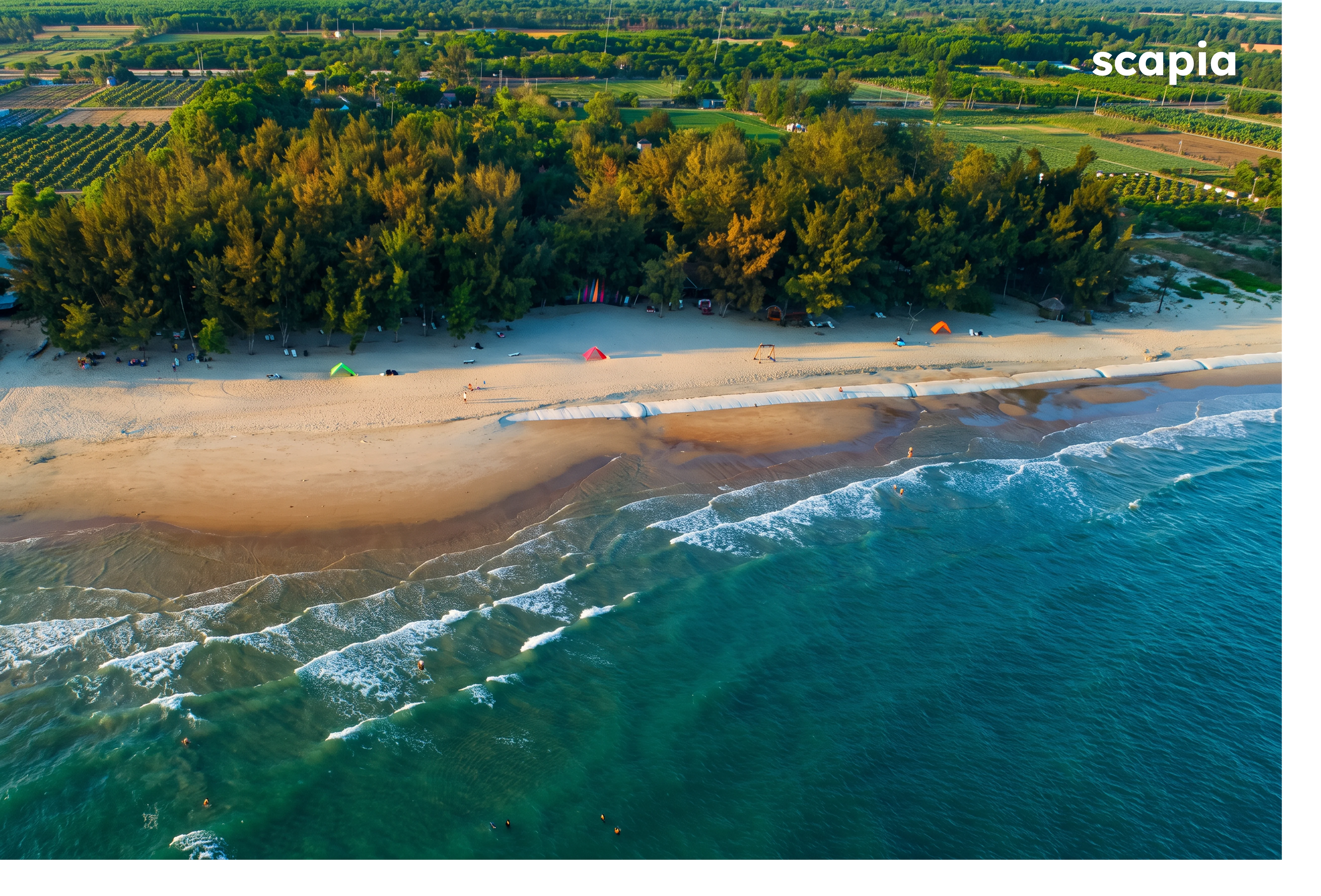
Vietnam’s beach season moves along the coast rather than happening everywhere at once, so there’s usually a good stretch of sand somewhere. Each beach is at its best in these months:
- Phu Quoc: November to March
- Mui Ne: November to April
- Da Nang and Hoi An: March to August
- Nha Trang: January to August
If your dates are fixed, pick the coast that matches the season rather than giving up on a beach break.
For Sightseeing and Heritage
If you’re planning a cultural trip linking Hanoi, Ninh Binh, Hue, and Hoi An, February to April is a good time to go. Temperatures are usually more manageable then for temple visits, walking tours, and cycling.
October and November also work well for Hanoi and the north’s heritage sites, though central Vietnam may get heavy rain at that time.
For Trekking and Adventure
For trekking in Sapa and Ha Giang, choose March to May or September to November. If caves are more your thing, April to June generally works better in Phong Nha.
Routes, cave access, and trail conditions can change after heavy rain, so check conditions locally and skip unguided trips to remote areas in severe weather.
For a Ha Long Bay Cruise
The best times for a cruise are March to May and September to November. No month can promise perfect visibility, and cruises can be cancelled when the authorities issue storm warnings. If a cruise is central to your trip, leave some flexibility around your onward flights.
For a Honeymoon
If you’re combining city sightseeing with Hoi An or a northern cruise, February to April works well. For a beach-led honeymoon in Phu Quoc, go between November and March, and for a romantic trip along the central coast, plan for March to May.
For Festivals
Tết, the Lunar New Year, falls in late January or February and is the biggest holiday of the year. It’s a great time to see family traditions and decorated streets, but fares rise, transport fills up, and many shops and restaurants close for a few days, so book early.
The Mid-Autumn Festival, in September or early October, fills the streets with lanterns and mooncakes. In Hanoi, Hang Ma Street in the Old Quarter is strung with lanterns in the weeks before.
If you’re flying in from India, a few practical things are worth planning for, from when to take your leave to sorting out your visa.
Best Time to Visit Vietnam from India
If it’s your first trip across Vietnam, February to April is often the most convenient window. It suits popular routes such as Hanoi–Ha Long Bay–Da Nang–Hoi An–Ho Chi Minh City and avoids the most disruptive weather in many regions. Vietnam is also only 1.5 hours ahead of India, so you lose almost no time to jet lag.
If you’re travelling during the Indian summer holidays, focus on Da Nang, Hoi An, and Nha Trang, where beach conditions can be good even when it’s raining elsewhere. Over a Diwali break, which usually falls in October or November, the north is a good bet, with Hanoi, Ninh Binh and Ha Long Bay all pleasant. For a year-end break, southern Vietnam and Phu Quoc are usually better choices than the central coast.
Vietnam’s main international gateways are Hanoi, Ho Chi Minh City, and Da Nang. An open-jaw itinerary, where you fly into one city and out of another, can cut down on backtracking on a north-to-south trip.
If you hold an Indian passport, you’ll generally need a visa before you travel. Vietnam’s official e-visa system currently lets eligible visitors apply for stays of up to 90 days, with single or multiple entry. Apply only on the official portal, evisa.gov.vn, and since immigration rules can change, check the latest requirements and approved entry points before booking. You can also check the Vietnam e-Visa guide as you plan your trip.
Once your dates are sorted, packing is the next thing to get right, especially if you’re covering more than one region.
What to Pack for Vietnam’s Weather
A multi-region trip often needs more variety than you’d expect, so make room for:
- Lightweight, breathable clothes for cities and coastal areas
- A compact umbrella or packable rain jacket
- Comfortable shoes with grip for wet streets and trails
- A light sweater for air-conditioned transport and cool evenings
- Warmer layers for Sapa or Ha Giang in winter
- Sun protection, including a hat and high-SPF sunscreen
- A waterproof pouch for your phone and travel documents
- Insect repellent, particularly for rural and delta areas
Laundry services are easy to find, so pack fewer pieces you can layer rather than a separate outfit for every kind of weather. Bring a universal adapter too, because Indian three-pin plugs won’t fit most Vietnamese sockets. <backlink to scalia store/0
So, When Is the Best Time to Visit Vietnam?
If you want one answer, March and April are the best months for the widest range of trips. The north is warming up, central Vietnam is usually dry, and the south is still manageable, even as it heats up.
The more useful answer, though, depends on your route:
- Choose October to April for Hanoi, Ninh Binh and Ha Long Bay.
- Choose March to May or September to November for northern trekking.
- Choose February to May for Hue, Da Nang and Hoi An.
- Choose December to April for Ho Chi Minh City and the Mekong Delta.
- Choose November to March for Phu Quoc.
Match your destination to the month, keep a little flexibility, and an occasional tropical shower won’t be a reason to postpone your trip. Once the plan is in place, it’s worth thinking about how you’ll pay for things while you’re there.
Make Your Vietnam Trip More Rewarding with Scapia
Once you've picked the right season and mapped out your itinerary, make your travel spends work harder with the Scapia Co-branded Credit Card. It comes with zero joining fees and zero annual fees, plus zero forex markup on international transactions. Once you land abroad, our smart forex feature on the Scapia app switches to the local currency when you do your first transaction and shows every spend alongside its INR value, so you always know what you’re spending and what you’re saving on forex.
From booking flights and stays to managing visas and other travel essentials, the Scapia app lets cardholders keep their plans in one place. Our Scapia Experiences covers what to do once you’re there, with thousands of activities worldwide, from food walks to day trips, and 20% rewards as Scapia Coins on every booking. So whether you’re cruising through Ha Long Bay, exploring Hoi An, or relaxing in Phu Quoc, you’ll spend less time sorting out logistics.
So whether you're cruising through Ha Long Bay, exploring Hoi An, or relaxing in Phu Quoc, you'll spend less time sorting out logistics.
Apply for the Scapia Co-branded Credit Card today.
Frequently Asked Questions
Which is the best month to visit Vietnam?
March is one of the best all-round months for a multi-region trip. April is good too, though southern Vietnam gets hotter. For your own itinerary, the best month depends on whether you're visiting the north, the central coast, or the south.
What is the rainy season in Vietnam?
Vietnam doesn't have a single rainy season. Northern and southern Vietnam are generally wetter from May or June to October or November, while Hue and Hoi An get much of their rain later, particularly from September to January.
When is Vietnam cheapest to visit?
Prices can be lower in the wetter or hotter months, often May to September, though this varies by destination. Central beach resorts can stay busy during the domestic summer holiday season.
Is December a good time to visit Vietnam?
December is excellent for Ho Chi Minh City, the Mekong Delta, and Phu Quoc. Northern Vietnam is cooler and can be misty, while Hue and Hoi An may still get heavy rain.
Is July a good time to visit Vietnam?
July suits a central-coast holiday in places like Da Nang or Nha Trang. Northern and southern Vietnam are hot, humid, and rainy, so keep your plans flexible.
How many days are enough for Vietnam?
Seven to ten days are enough for one or two regions. Allow around two weeks for a comfortable north-to-south itinerary. If you try to cover the whole country in under a week, you'll usually spend too much of it in transit.
When is the best time to visit Ha Long Bay?
March to May and September to November generally offer a good balance of temperature and visibility. Cruises can be cancelled in severe weather, especially in the summer storm season.
What is the best time to visit Vietnam for a honeymoon?
February to April is a good time for a mixed itinerary. For Phu Quoc, go for November to March; for Hoi An and the central coast, March to May is better.