
Thinking about your next holiday? We've got just the place in mind – and it's only a short flight away! It's a country where many cultures culminate to bring you scrumptious food, vibrant festivals and charming streets. You could find yourself amidst the buzz of people and city lights one day and the serenity of island beaches and ancient rainforests the next.
If that sounds like your kind of trip, Malaysia is calling!
With Scapia, you have more reason to answer: we've partnered with Tourism Malaysia on a four-month campaign to help you discover all that the country has to offer, from the heritage streets of Penang and Melaka to the islands of Langkawi and the rainforests of Sabah and Sarawak.
Read on to know what Malaysia has in store for you!
Explore discounts and bonus Scapia Coins on eligible flights, stays and experiences in Malaysia!
Malaysia 101: What you can expect
First, the Lay of the Land.
Malaysia is spread across two halves of land mass, separated by the South China Sea. The west is Peninsular Malaysia, bordering Thailand up north and Singapore at its southern tip. To the east is Malaysian Borneo, which shares the world's third-largest island with Indonesia and Brunei.
Each half has its own personality.
| West Malaysia (Peninsular) | East Malaysia (Borneo) | |
|---|---|---|
| 🏙️ Cities | Kuala Lumpur, George Town (Penang), Melaka | Kota Kinabalu (Sabah), Kuching (Sarawak) |
| 🏝️ Islands & beaches | Langkawi, Perhentian Islands | Sipadan, Manukan and Sapi islands |
| 🌿 Nature | Cameron Highlands, Genting Highlands, Taman Negara | Mount Kinabalu, Mulu caves, Bako National Park |
| ✨ Best for | Food, heritage, city breaks, island hopping | Wildlife, rainforests, trekking, diving |
Whichever half you pick (or both!), you'll find the one thing that makes Malaysia so easy to love: its people.
Where cultures come together
Malaysia is home to Malay, Chinese and Indian communities, along with dozens of Indigenous groups in Borneo. You'll see this mix everywhere you go. Walk a few minutes in any big city and you can move from Chinatown to Little India to a Malay village, and signboards switch between Malay, English, Chinese and Tamil. It's on your plate too: hawkers serve nasi lemak, dim sum and banana-leaf rice, sometimes all under one roof.
For Indian travellers, there's a familiar thread running through it all. Malaysia's Indian community is largely Tamil. You'll hear Tamil in Little India, have dosas (called thosai in Malaysia and Singapore) and parotta's cousin, ‘roti canai’ at mamak stalls, and see Deepavali celebrated as a national holiday. It's foreign and familiar at the same time, and that's a big part of the fun!
The variety doesn't stop at culture. In one trip, you can go from city skylines to misty tea hills, and from turquoise islands to ancient rainforests. Here's where to find it all, starting with West Malaysia.
Book your Flight to Malaysia today!
West Malaysia
1. Kuala Lumpur: where most trips begin
Chances are, your Malaysia trip will begin in Kuala Lumpur, and it's worth giving the city more than a quick stopover. The bustling city is home to the world's tallest twin towers, the Petronas Towers, where you can take in the city skyline, shop, and catch a fountain show. To really get a feel of the city, head to its older neighbourhoods. In Chinatown, Petaling Street is lined with market stalls, Chinese shophouses and old-school coffee shops. A short ride away is Brickfields, Kuala Lumpur’s Little India, where over a century of Malaysian life has given Indian culture a twist of its own. Think late-night mamak stalls serving frothy teh tarik and mee goreng mamak, and the Torana Gate, a carved sandstone gateway gifted by India to Malaysia.
Add a trip to Batu Caves and an evening at a night market, and you'll see just how many worlds this one city holds.
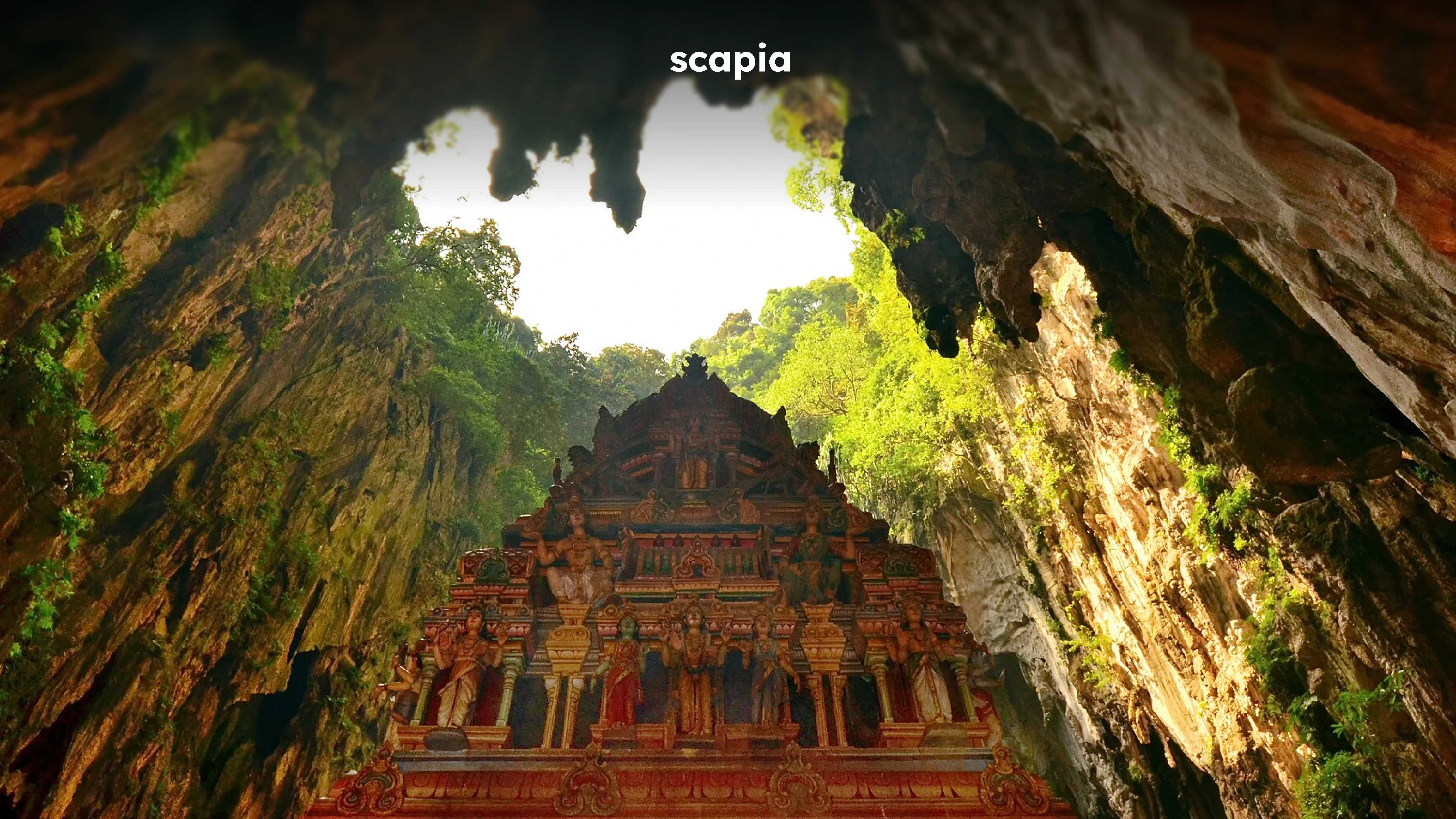
Things to do at Kuala Lumpur:
- Catch the city from above at the Petronas Twin Towers' skybridge and observation deck. [Book on Scapia]
- Climb the 272 rainbow-painted steps of Batu Caves, set into a towering limestone hill. Your calves will feel it, but the view is worth it! [Book on Scapia]
- Take an evening boat ride through the Kuala Selangor mangroves, where fireflies twinkle in the trees and, on some nights, glowing plankton lights up the water. [Book on Scapia]
- Need a break from the heat? Genting Highlands is about an hour away, with cool air and cable car views.
What to eat:
- Satay and grilled seafood on Jalan Alor, the Kuala Lumpur’s busiest street-food strip, which stays lively well into the night.
- Satay in Kajang, a town about 40 minutes from KL that's so well known for it, you'll see "Kajang satay" on menus across Malaysia.
- 15+ local dishes in one evening on the Sambal Streets Food Tour, the easiest way to eat like a local on your first night. [Book on Scapia]
Pro-tip: Head to Batu Caves early in the morning, before the heat and the crowds set in. Make sure to wear temple-friendly attire.
2. Penang: Malaysia’s food capital
If there's one place in Malaysia you should arrive hungry, it's Penang. Its capital, George Town, is a UNESCO World Heritage Site, and it's one of those places best explored on foot. Its lanes are lined with old shophouses, clan houses and colourful street art, and Chinese, Malay, and Indian neighbourhoods sit right next to each other – it’s this mix that makes the food so delicious too! Penang is famous across Malaysia for its hawker fare, and locals will happily debate which stall makes the best laksa or char kway teow. Beyond George Town, the island has hilltop views, beaches and quiet countryside, so it's easy to balance the eating with some exploring.
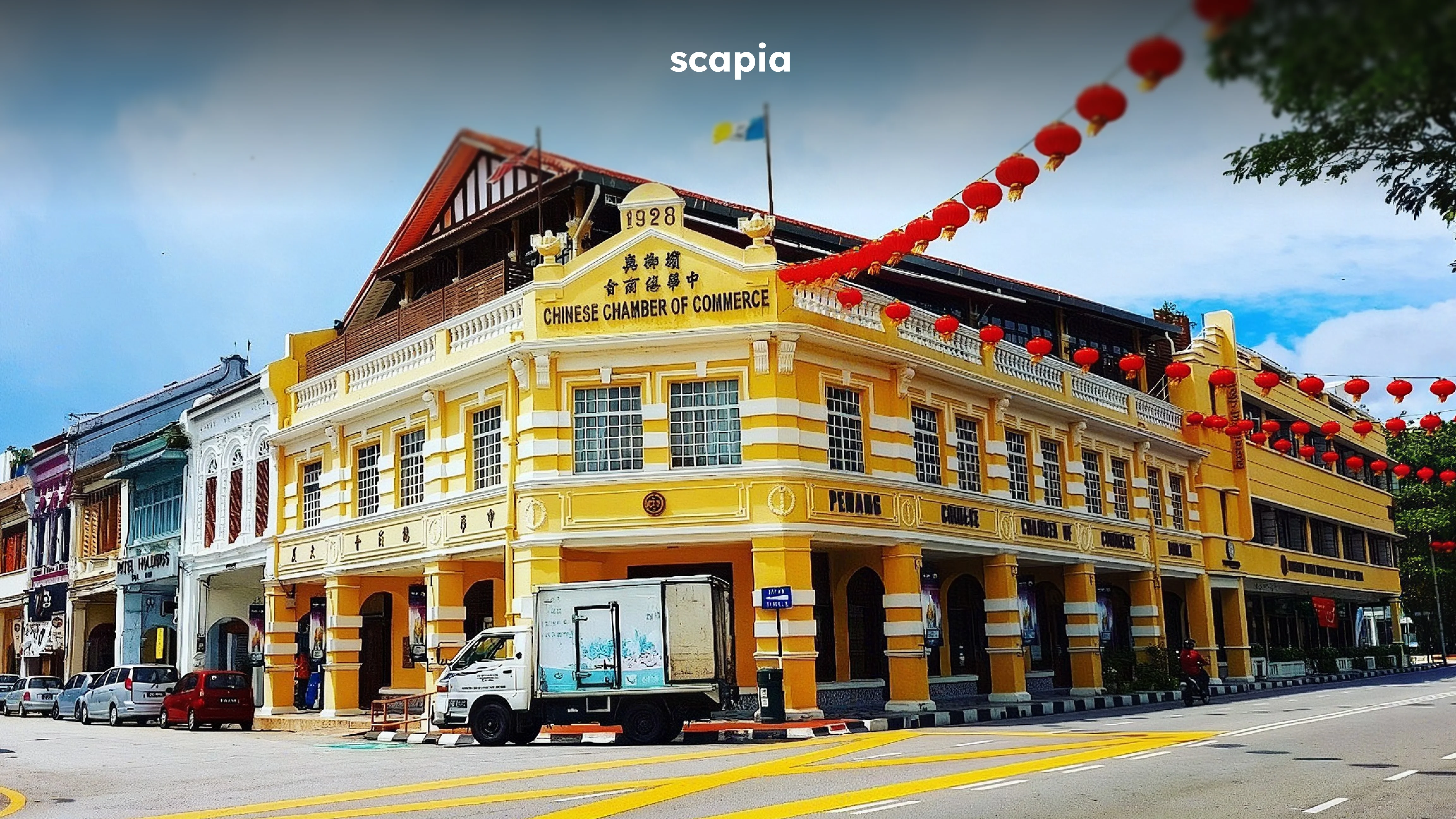
Experiences:
- Go on a street art hunt through George Town's heritage lanes. Some murals have a real bicycle or swing built in, so you can hop on and become part of the picture.
- Stroll along the Clan Jetties, wooden stilt villages that stretch out over the sea.
- Soak in the hilltop views at Kek Lok Si, then head down for a bowl of the famous local laksa. [Book on Scapia]
- Swap the city for paddy fields and kampung (village) houses on a cycling tour of the Malay countryside. [Book on Scapia]
What to eat:
- Assam laksa, a sour, spicy fish-based noodle soup that's nothing like the creamy laksa you may have tried.
- Char kway teow, flat noodles with that smoky flavour only a very hot wok can give.
- Nasi kandar, rice drowned in a mix of curries, first served by Tamil Muslim traders. It might just be the most familiar plate of your trip.
- Seaside dinners at the hawker stalls along Gurney Drive.
- A 15+ dish food crawl with a local guide on the Penang Street Food Tour. [Book on Scapia]
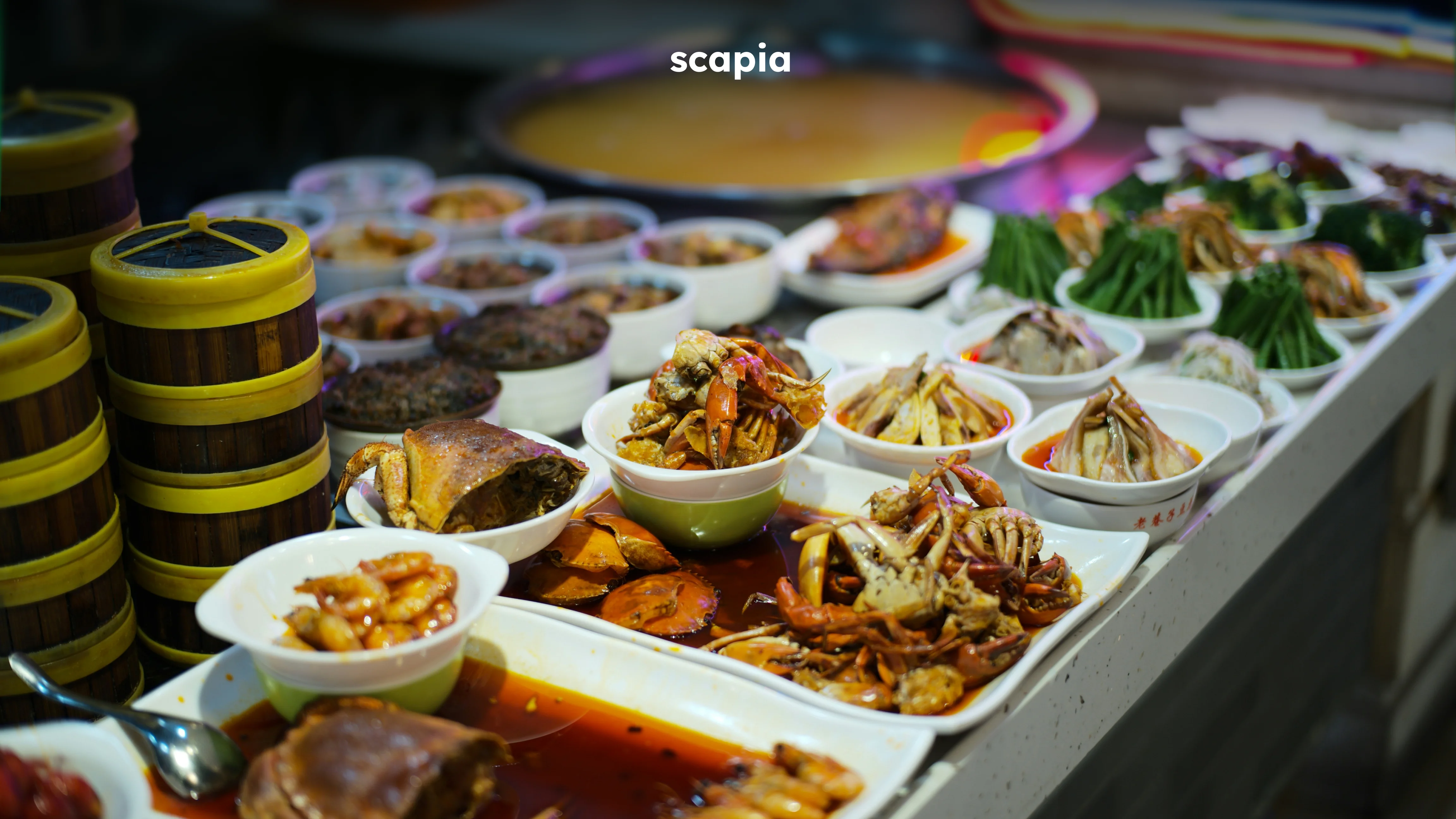
Pro-tip: Penang's most famous stalls tend to sell out early or close one day a week, so go early and always have a backup in mind.
3. Melaka: For a story in every street
Another UNESCO World Heritage Site, Melaka was once one of Asia's most important trading ports. Over the centuries it was ruled by the Portuguese, the Dutch and the British. Traders from China, India and the Arab world made it home along the way. Its rich history is still visible in its old town. What makes Melaka special is its Peranakan culture, a unique blend of Chinese and Malay traditions that shows up in everything from the architecture to the food. You'll also walk past red colonial buildings from the Dutch era. Melaka is small enough to explore in a day, but stay the night and you'll catch it at its prettiest, when the river and old town light up after dark.
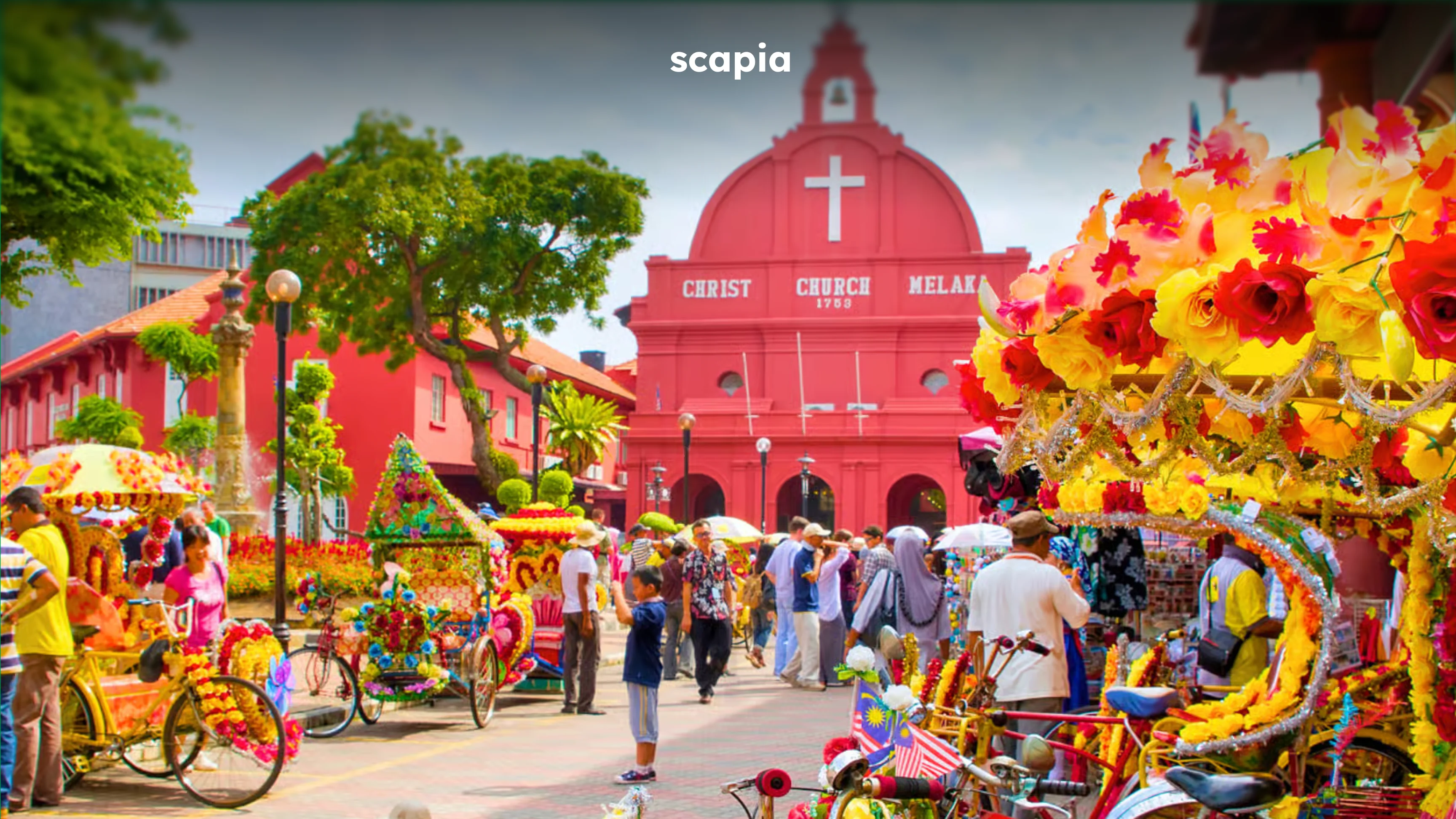
Experiences:
- Step into the world of the Peranakans (also called Baba-Nyonya), whose homes, beadwork and porcelain fill the heritage lanes.
- Get to know the Chitty community, Tamil-descended Peranakans who've called Melaka home for centuries.
- Take a cruise along the Melaka River after dark, past lit-up shophouses and murals.
- Short on time? You can see the highlights on a day trip from Kuala Lumpur. [Book on Scapia]
What to eat:
- Nyonya laksa, rich and creamy with coconut.
- Chicken rice balls, a Melaka original you won't find in many other places.
- Satay celup, where you dip skewers into a shared pot of bubbling peanut sauce.
- Cendol, shaved ice with coconut milk and gula Melaka (palm sugar), perfect for cooling off in the afternoon.
Pro-tip: If you can, stay the night on a Friday or Saturday, when Jonker Street turns into a lively night market.
4. Langkawi: islands with a wild side
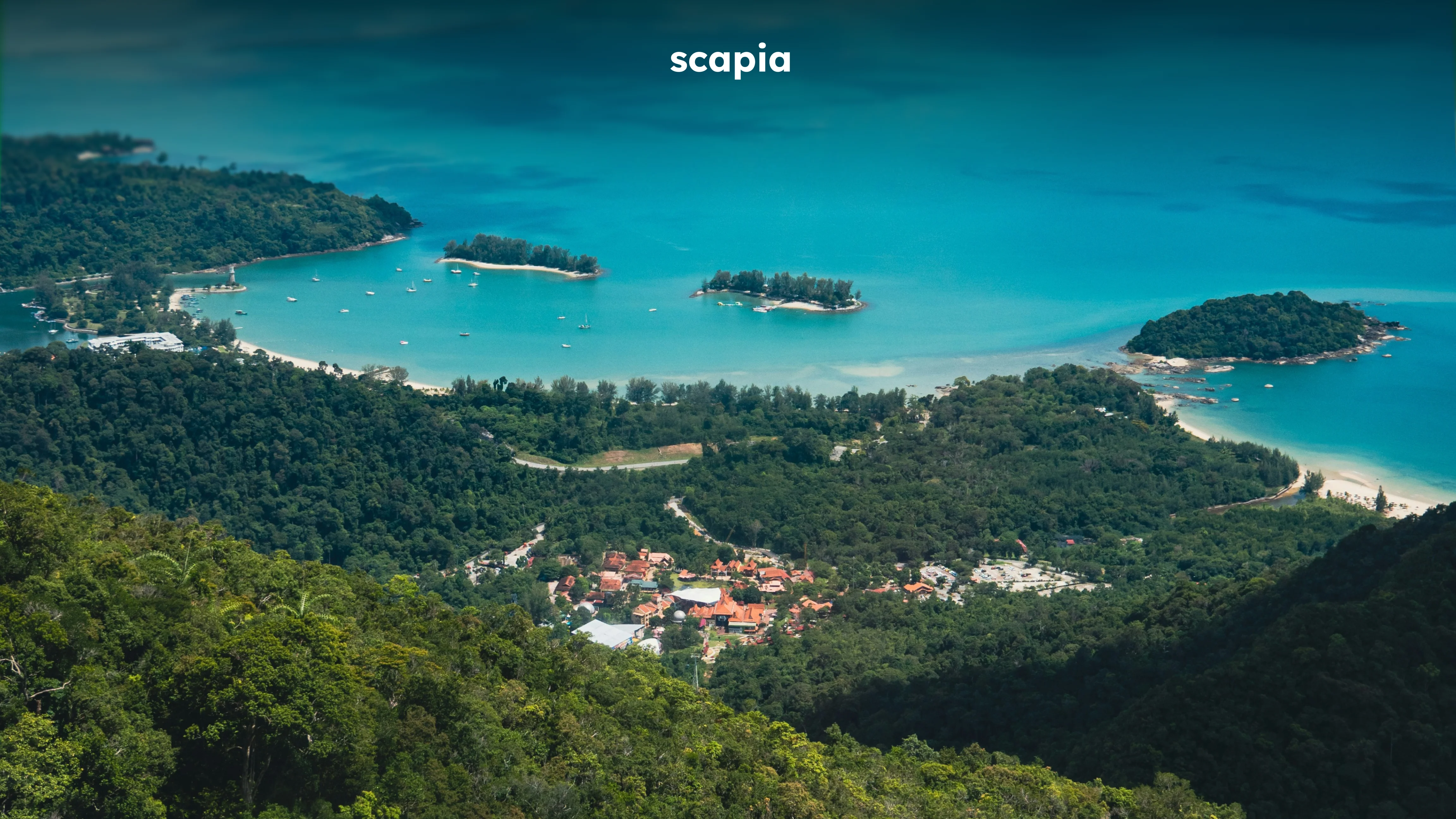
Langkawi is a cluster of around 99 islands off Malaysia's northwest coast, and it's perfect if you want a beach holiday with a bit of adventure thrown in. It's recognised as a UNESCO Global Geopark, so beyond the sandy beaches you'll find dramatic limestone cliffs, mangrove forests and rainforest-covered mountains to explore. You can spend your days island hopping, kayaking or taking a cable car up into the clouds, then wind down with a seafood dinner by the beach. And since Langkawi is a duty-free island, it's a good place to pick up some shopping too.
Experiences:
- Walk the Sky Bridge, a curved footbridge hanging over the rainforest, with the Andaman Sea stretched out below.
- Take a boat through the mangrove channels and bat caves of Kilim Geoforest Park.
- Hop between islands by jet ski, stopping at a freshwater lake, sandbars and quiet beaches along the way. [Book on Scapia]
What to eat:
- Grilled seafood and satay at Langkawi's night markets, set up in a different village each evening.
- Nasi campur, a pick-and-mix plate of rice with whatever local dishes catch your eye.
Pro-tip: Rent a car to get around. Malaysia drives on the left, just like India, and the island's roads are pleasantly quiet.
5. Cameron Highlands: tea, mist and cool air
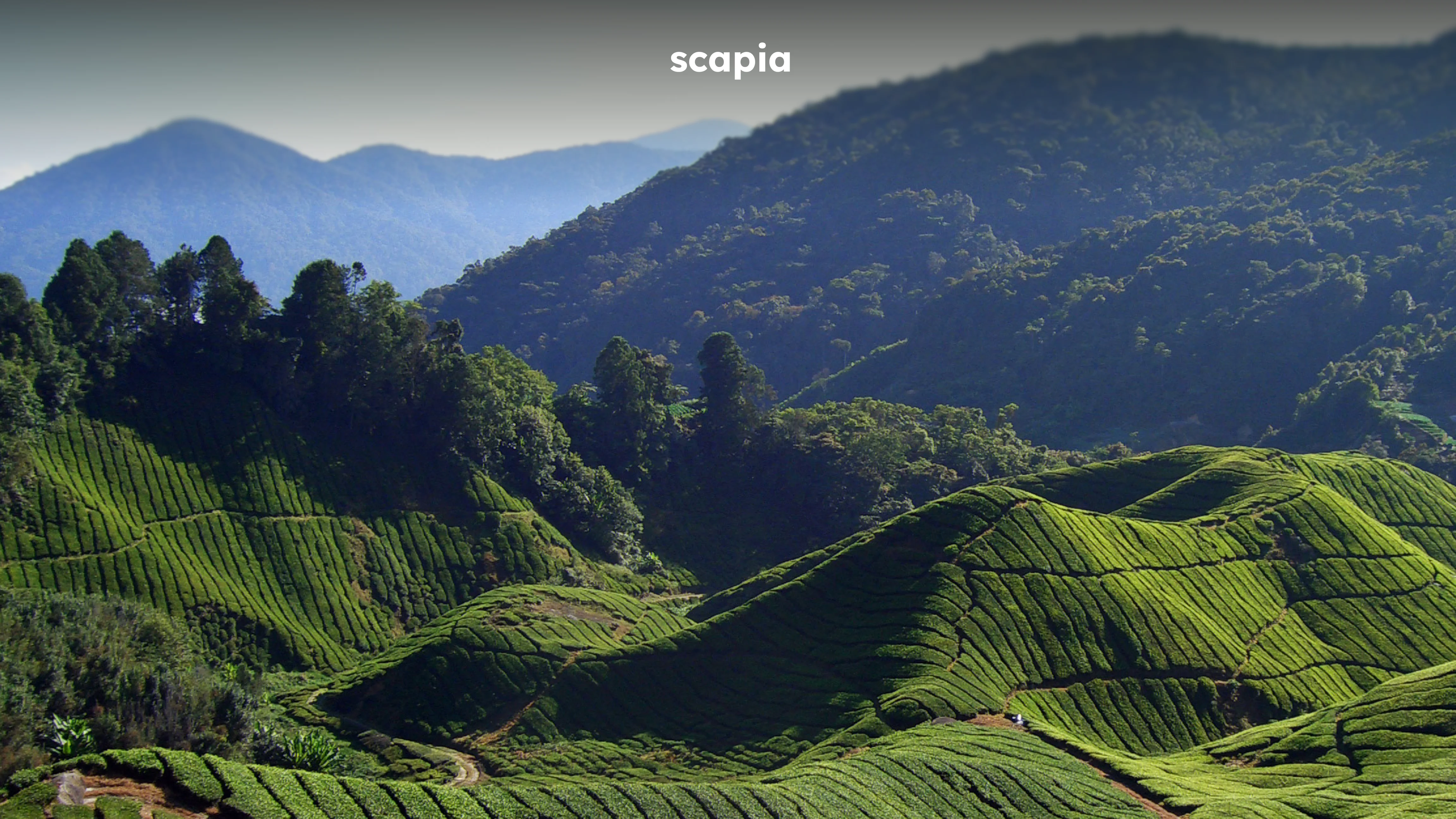
About four hours by road from Kuala Lumpur, Cameron Highlands is where Malaysians head when they need a break from the heat. This hill station sits high up in the mountains, with cool, misty weather year-round. It's home to some of the country's largest tea estates, where neat green rows of tea bushes roll across the hills as far as you can see. Spend your time walking through misty forests, picking strawberries and sipping tea with a view. If you've loved a trip to Munnar or Ooty, this will feel like a familiar kind of happy place.
Experiences:
- Walk through the Mossy Forest, where almost every branch is wrapped in moss and the mist rarely lifts.
- Sip a cup of fresh tea on a terrace overlooking the very estate it came from.
- Pick your own strawberries at a highland farm.
- Short on time? Opt for a day trip from Kuala Lumpur, with lunch included. [Book on Scapia]
What to eat:
- Steamboat, a bubbling hotpot you cook right at your table, ideal for cool evenings.
- Warm scones with strawberry jam and a pot of highland tea.
Pro-tip: Evenings get chilly - so pack a light jacket. The Mossy Forest boardwalk sometimes closes for repairs, so check with your guide and wear shoes you don't mind getting muddy.
Got a few more days?
- Perhentian Islands: Think glassy turquoise water, white sand, and reefs where you can snorkel alongside turtles and blacktip reef sharks. Most resorts close from November to February for the monsoon, and there are no ATMs on the islands, so carry enough cash.
- Taman Negara: Often called the world's oldest rainforest, at around 130 million years old. You arrive by longboat, then walk among the treetops on one of the world's longest canopy walkways.
When you’re ready to swap city lights and old towns for jungle canopies, Malaysian Borneo is where you go – it’s a two-to-three-hour flight from KL.
East Malaysia (Borneo)
6. Sabah: mountains, rainforest and reefs
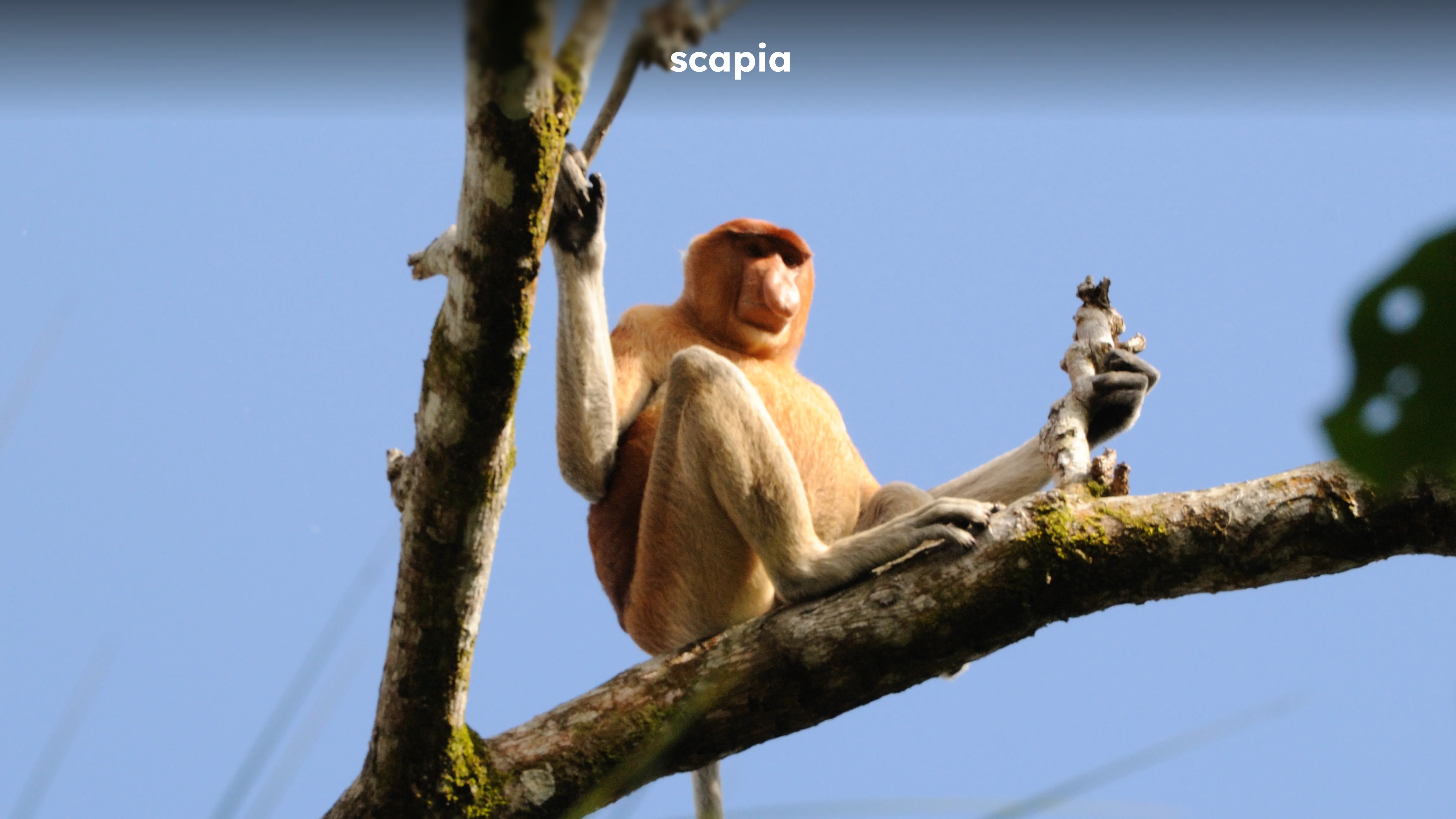
Sabah, on the northern tip of Borneo, is a dream for nature and adventure lovers. It's home to Mount Kinabalu, Malaysia's highest peak and part of a UNESCO World Heritage Site, which you can climb to watch the sunrise from above the clouds. Its rainforests are home to orangutans, pygmy elephants and proboscis monkeys, that's found only in Borneo. If you head on over to the shoreside of Sabah, you'll find clear waters and colourful reefs, ideal for snorkelling and diving. The state is also home to more than 30 Indigenous groups, each with its own traditions, food and festivals. Its capital, Kota Kinabalu, is the natural starting point, with islands just a short boat ride away.
Experiences:
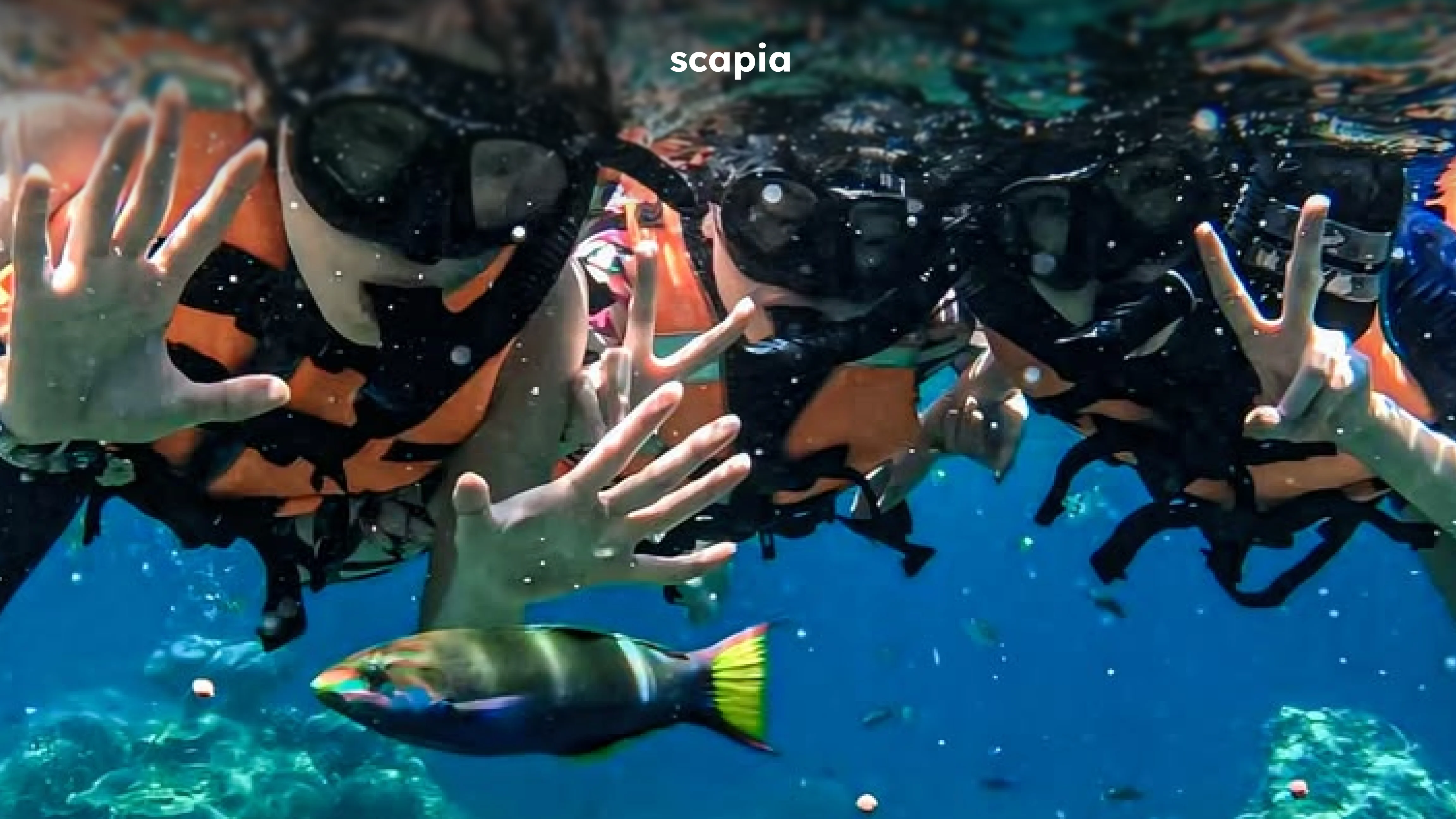
- Snorkel off Manukan and Sapi islands, just 15–20 minutes by boat from the city. [Book on Scapia]
- Cruise the Bongawan River at dusk, as proboscis monkeys settle in for the night and fireflies light up the mangroves. [Book on Scapia]
- Learn how Sabah's Indigenous communities live, cook and build at the Mari Mari Cultural Village. [Book on Scapia]
- Climb Mount Kinabalu and watch the sunrise from the top of Malaysia.
- Take a short domestic flight to meet the orangutans at Sepilok, or to dive with turtles at Sipadan.
What to eat:
- Hinava, fresh raw fish cured in lime, ginger and chilli
- Tuaran mee, springy fried egg noodles named after the town they come from.
- Seafood at Kota Kinabalu's waterfront night market, where you pick your catch and they grill it right in front of you.
Pro-tip: Permits for Kinabalu and Sipadan are limited and can sell out months in advance, so book these first and plan the rest of your trip around them.
7. Sarawak: caves, longhouses and laid-back Kuching
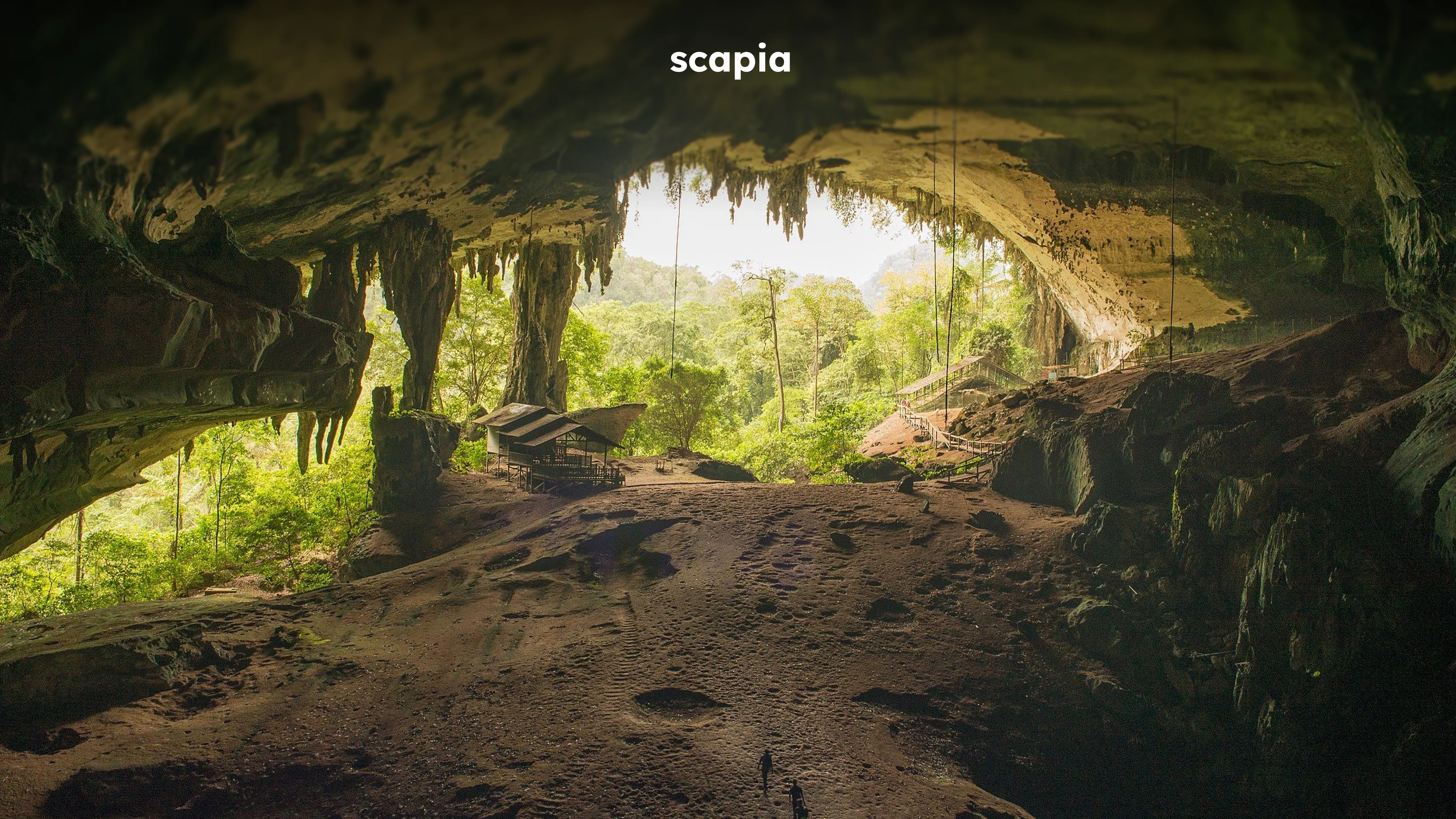
Sarawak is Malaysia's largest state, and one of its most culturally rich. Its capital, Kuching, is a relaxed riverside city with a lovely waterfront, cosy cafés, colourful street art and a fondness for cats (you’ll see evidence of it in the many cat statues around town). Step outside the city and Sarawak's wild side opens up: rainforests where orangutans and proboscis monkeys roam, and Gunung Mulu National Park, another UNESCO World Heritage Site, home to some of the largest caves on earth. What makes Sarawak truly special, though, is its people. Many Iban and Orang Ulu communities still live in traditional longhouses, where an entire village shares one long roof, and some welcome visitors to stay the night and experience their way of life.
Experiences:
- Spot proboscis monkeys and wind-carved sea stacks at Bako National Park. [Book on Scapia]
- Watch semi-wild orangutans emerge from the forest at Semenggoh.
- Explore the giant caves of Mulu, then stay till dusk to watch millions of bats spiral out into the sky.
- Spend a night in an Iban longhouse, where an entire village lives under one long roof.
- Plan your trip for June to catch the Rainforest World Music Festival.
What to eat:
- Sarawak laksa, a spicy, tangy noodle soup that locals happily eat for breakfast.
- Kolo mee, springy noodles tossed with minced meat.
- Kek lapis, the striped layer cake Sarawak is famous for, and a great one to carry back home.
Pro-tip: Orangutan sightings at Semenggoh aren't guaranteed, so if you can, catch both the morning and afternoon feeding sessions.
Ready to pack your bags?
Whether you're in it for the food, the culture, the islands or the rainforests – or all of it, Malaysia has a trip waiting for you. And with Scapia's partnership with Tourism Malaysia, you can discover more of the country – with discounts and bonus Scapia Coins on eligible flights, stays and experiences!
All you need is the Scapia Co-branded Credit Card!
Not a cardholder? Apply now, and start earning rewards on your everyday spends that you can put towards your next holiday!