Vietnam has one of the most traveller-friendly visa systems in Southeast Asia for Indians. The country itself gives you plenty of reasons to use all of them: the coast, the highlands, the food, the cities. Here is everything you need to sort before you fly.
Do Indians Need a Visa for Vietnam?
Indian passport holders require a visa to enter Vietnam. There is no visa-free arrangement for Indian citizens on mainland Vietnam.
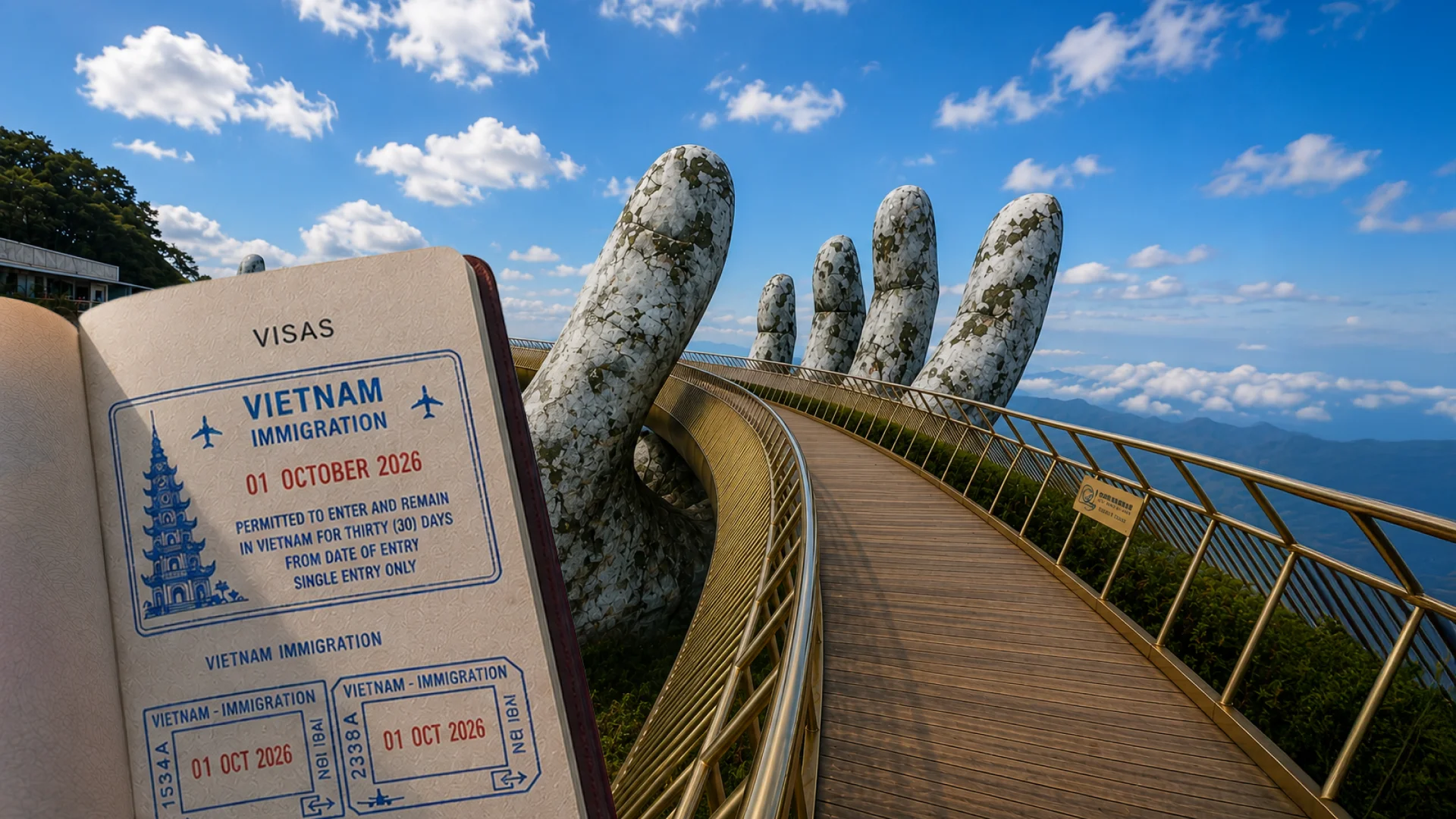
The standard and most practical route is the Vietnam e-visa, applied for entirely online through the official government portal. No embassy visit, no physical document submission, and the approved visa arrives digitally. It is valid for up to 30 days (single or multiple entry) and accepted at all 83 designated international entry points across air, land, and sea.
Your passport must be valid for at least 6 months from your planned date of arrival in Vietnam, with at least 2 blank pages available for immigration stamps.
One exception worth knowing: Phu Quoc Island offers visa-free entry for Indian citizens for up to 30 days — but under strict conditions. You must arrive on a direct international flight or boat to Phu Quoc, stay on the island for your entire trip, and exit directly to another country. Any travel to mainland Vietnam — even briefly — requires a full visa. However, the Indian Embassy recommends that Indians obtain an e-visa even for Phu Quoc trips, given the complications that arise if mainland travel becomes necessary unexpectedly.
Types of Vietnam Visa for Indians
Indian travellers visiting Vietnam for tourism have two practical options:
| Visa Type | How to Apply | Validity / Stay | Entry | Best For |
|---|---|---|---|---|
| Tourist E-Visa | Online via evisa.gov.vn or a trusted third party visa processing service | Up to 30 days from date of issue | Single or multiple entry (selected at time of application) | Recommended for most Indian tourists |
| Visa on Arrival (VoA) | Apply online for a visa approval letter before departure; present letter and pay stamping fee at airport on arrival | Varies by approval letter | Air entry only | Emergency or last-minute situations only — see Section 7 |
Vietnam Visa Requirements for Indians
All documents are uploaded digitally during the e-visa application at evisa.gov.vn.
Mandatory documents:
- Scanned copy of your passport’s front page with biographical data
- Scanned copy of passport’s back page
- Photograph, passport-size adhering to to ICAO standards (plain background, front-facing, no glasses)
Supporting documents:
- Hotel booking or accommodation proof in the form of booking confirmation or voucher
- Onward ticket for proof of travel into Vietnam
- Return ticket for proof of travel out of Vietnam
- Completed visa application form filled directly within the portal
Your passport must be valid for at least 6 months from your date of entry and have a minimum of 2 blank pages.
Vietnam Digital Arrival Card (mandatory for Ho Chi Minh City arrivals):
As of April 15, 2026, all foreign nationals arriving at Tan Son Nhat International Airport in Ho Chi Minh City must complete a Vietnam Digital Arrival Card (DAC) online before boarding. This is separate from your e-visa. The form is free, takes a few minutes to complete, and generates a QR code that immigration officers scan on arrival. It must be submitted within 3 days before arrival. The system is currently live at Tan Son Nhat (Ho Chi Minh City) and is being phased in at Noi Bai (Hanoi) and other airports.
Important: You must enter Vietnam at the specific port of entry listed on your approved e-visa. If your flight itinerary changes after approval, you will need to submit a new application — the entry port cannot be amended once the visa is issued.
How to Apply for a Vietnam E-Visa
The entire process is online. Apply only through the official Vietnam National Electronic Visa portal at evisa.gov.vn.
- Go to the official portal. Visit evisa.gov.vn
- Fill in your details. Enter your personal information, travel dates, and your intended entry and exit points. Double-check all details against your passport before proceeding.
- Upload your documents. Upload scanned copies of your passport pages and a recent photograph in the required format.
- Pay the fee. Complete payment online through the portal’s payment gateway. The fee is non-refundable regardless of outcome and costs ~USD 25 for single entry, ~USD 50 for multiple entry.
- Submit and save your reference number. Once submitted, save your application reference number to track your status on the same portal.
- Receive and carry your e-visa. The approved e-visa arrives as a PDF. Print a copy and save a digital backup — you must present it at immigration on arrival.
- Complete the Digital Arrival Card (if arriving in Ho Chi Minh City). Submit the Vietnam Digital Arrival Card at least 3 days before arrival at Tan Son Nhat. The card is free and takes a few minutes. Save the QR code on your phone.
Apply at least 10–15 days before your travel date to account for processing and any document follow-up. Around Vietnamese public holidays (Tet, Reunification Day, National Day), processing queues grow and delays are common.
Vietnam Visa Fees for Indians
The e-visa fee is paid directly to the Vietnam government through the official portal and is non-refundable, including in cases of rejection. There are no additional embassy fees or appointment charges.
| Visa Type | Official Government Fee |
|---|---|
| Tourist E-Visa — Single Entry (up to 90 days) | USD 25 |
| Tourist E-Visa — Multiple Entry (up to 90 days) | USD 50 |
Processing Time and Validity
There is no transit visa for Vietnam. If your layover exceeds 24 hours or you exit the international transit zone at any point, you need a full e-visa before you depart for Vietnam.
| Standard processing time | 5 working days from date of complete submission (excludes weekends and Vietnamese public holidays). In practice, allow 5 working days. |
| Recommended lead time | Apply at least 10–15 days before travel. During Vietnamese public holidays and peak season (November–April), apply 3 weeks in advance. |
| Visa validity | Up to 30 days from date of issue |
| Maximum stay duration | You must enter and exit Vietnam within the approved validity dates on your e-visa. Do not overstay — overstays result in fines and can affect future entry. |
| Entry type | Single or multiple entry — selected at time of application. Confirm with Scapia which options are currently supported. |
| Permitted entry modes | Air, land, and sea — through 83 designated international border gates across Vietnam |
| Digital Arrival Card | Mandatory for arrivals at Tan Son Nhat (Ho Chi Minh City) from April 15, 2026. Submit within 3 days before arrival. Being phased in at other airports. |
Visa on Arrival for Indians in Vietnam
Visa on Arrival (VoA) is available to Indian passport holders but involves more steps than the e-visa and is only available at international airports — not at land or sea border crossings.
To use a VoA, you must obtain a pre-approved approval letter before you depart. When you land at a participating airport, you present the approval letter, your passport, and two passport-size photographs at the Visa on Arrival counter, then pay a stamping fee in cash (USD).
VoA is processed at the following international airports:
- Noi Bai (Hanoi)
- Tan Son Nhat (Ho Chi Minh City)
- Da Nang
- Cam Ranh (Nha Trang)
- Cat Bi (Hai Phong)
- Lien Khuong (Da Lat)
- Can Tho
- Phu Bai (Hue)
For the vast majority of Indian travellers, the e-visa is the better choice: fully online, no approval letter required, no airport queuing, and valid at all 83 designated entry points including land borders. Visa on Arrival is best reserved for genuine last-minute situations where the e-visa window has passed.
Tips for Travelling to Vietnam
Apply early as processing is not instant. While standard processing takes 3 working days, delays are common around Vietnamese public holidays. Apply at least 10–15 days before departure, and 3 weeks in advance during Tet or national holiday periods.
Complete the Digital Arrival Card before you fly to Ho Chi Minh City. If you’re arriving at Tan Son Nhat Airport, you must submit the Vietnam Digital Arrival Card online within 3 days before arrival. It’s free and quick, but skipping it will cause delays at immigration. Save the QR code on your phone and have it ready at the counter.
Carry your e-visa in both print and digital form. Immigration at Vietnamese entry points will check your e-visa alongside your passport. Keep a PDF on your phone and print a copy as backup — do not rely on connectivity at the border.
If you’re heading to Phu Quoc, get an e-visa anyway. The island’s 30-day visa-free entry for Indians sounds simple, but the Indian Embassy in Hanoi recommends Indians to obtain a full e-visa even for Phu Quoc trips. If you need to travel to the mainland unexpectedly, like a medical emergency or a flight disruption, not having a mainland visa could create complications.
Sort your cash before arrival or at the airport. Vietnam’s currency is the Vietnamese Dong (VND). Cards are accepted at most hotels and larger restaurants in Hanoi and Ho Chi Minh City, but local markets, street food stalls, and smaller towns mostly operate on cash. Withdraw from ATMs in the city rather than exchanging at the airport for better rates.
Pick up a local SIM at the airport. SIM cards from Viettel or Vinaphone are available at all major airports for a few hundred thousand VND. They give you reliable 4G data across the country at a fraction of international roaming costs.
Frequently Asked Questions
Do Indians need a visa for Vietnam?
Yes. Indian citizens require a visa to enter Vietnam. The e-visa is the recommended option — applied for entirely online at evisa.gov.vn, valid for up to 90 days, and accepted at all 83 designated entry points. No embassy visit required.
Where do I apply for a Vietnam e-visa officially?
The official portal is evisa.gov.vn, operated by the Vietnam Immigration Department. Use only this portal — there is no need to pay additional fees to third-party websites for the same application.
How long does Vietnam e-visa processing take?
Standard processing is 5 working days from the date of complete submission, excluding weekends and public holidays. In practice, allow 5 working days. Apply at least 10–15 days before travel to give yourself a buffer for corrections.
Do I need a Digital Arrival Card on top of my e-visa?
Yes, if you are arriving at Tan Son Nhat International Airport in Ho Chi Minh City. A Digital Arrival Card is mandatory for all foreign nationals arriving there. It is separate from your e-visa, free, and must be submitted within 3 days before arrival. The system is being phased in at other airports.
Can I enter Vietnam by road or sea on an e-visa?
Yes. The Vietnam e-visa is accepted at designated land border crossings (such as Moc Bai, Lao Cai, and Huu Nghi), seaports, and international airports — 83 entry points in total. Check evisa.gov.vn for the full current list.
Does my child need a separate Vietnam e-visa?
Yes. Every traveller, including infants and children, requires their own individual e-visa. There is no family or dependent entry arrangement.
What are common reasons for Vietnam visa rejection?Rejections typically stem from incomplete, inaccurate, or mismatched information on the application form. Double-check all passport details, travel dates, and entry points before submitting. The application fee is non-refundable if rejected.